

TL;DR
I was recently without a phone signal and it got me wondering whether I actually exist if my reality isn’t shared with others.
RAMBLINGS: One of the things I have become aware of from spending so much time on the Thames is how many badly named boats there are and I dig into why this is a thing.
ARTICLE: I became fascinated by the Fischer Protocol and what other similarly weird but powerful thought experiments I could come up with for the good of humanity.
OPEN STUDIOS: Come visit my world and hang out in my Kingston riverside studio on the 9th and 10th of October.
FOLKLORE ART: I am delighted that my Days of the Brindled Cow painting is part of the Touching Grass: Seasons of Folklore exhibition at the Hackney Gallery from the 9th-11th October.
ILLUSTRATION FESTIVAL AND TALK: I will have a stall and be doing my bingo machine talk at the Brighton Illustration Festival on the 31st Oct/1st Nov.
WORKSHOP: A day of Masks in London on 23rd October.
WORKSHOP: Only two places left on my two-day Dancing with the Inner Critic workshop on November 26th and 27th with myself and Simon Cavicchia.
BUY: Get an analogue versions of this Substack (or the podcast) delivered to your door.
A photo of me pointing a vintage Super 8 camera into a rock pool to encourage you to scroll to the end of the Substack and read about how you can financially support my work by Buying stuff in my shop, becoming a patron of my studio, become a paid subscriber or buying me a coffee (tip jar).
1. Hello
I was recently in a remote part of Cornwall without a phone signal. I had wifi at the place I was staying but when I went out to walk and explore I was totally disconnected. I’m generally OK with this. I like having the choice of using my phone removed as it feels like an invitation to re-tune my attention to my surroundings. But the thing I found hard on this trip was not being able to share my “live” experience with anyone. I’m not one for sharing everything all of the time, but remote Cornwall was indulging many of my interests (the sea, nature, adventure, creatures) and I felt a strange pang of sadness that I was unable to send photos or stories of what I was encountering to those I knew would be similarly enchanted by them. I pondered this for a while and concluded that this sense of unease wasn’t simply because I’ve developed a habit of sharing stuff with others but was maybe something much deeper.
The poet Mary Oliver has a poem entitled “Sometimes” in which she has a short section that goes, “Instructions for living a life: Pay attention. Be astonished. Tell about it.” I’ve heard those lines many times. In fact, they inspired a What the February?! challenge back in 2021. But they took on a different meaning for me when I found myself unable to digitally share my experience on the Cornish coast. I had some lazy, generic theories that maybe I simply wanted to show people that I am OK and am thinking of them. And, even though I am pretty sure that I don’t share stuff on social media to curate some sort of life image, maybe a tiny part of me wanted to do that. But the interesting question I ended up pondering as I walked along an utterly deserted coastal path was, “If I do not share my experience with anyone, has it actually happened? If I am not witnessed - do I actually exist?”
Psychoanalyst Donald Winnicott suggested that a baby’s developing sense of self is intimately connected with what is reflected back in the mother’s face. He summarised this idea as, “When I look I am seen, so I exist”, meaning that when the baby looks at the mother it is having an experience of seeing itself. So maybe, when I spotted a cormorant on the cliffs and couldn’t send it immediately to somebody who I know loves cormorants, it broke the familiar loop of their reaction reflecting my experience back to me in a way that sort of confirmed that I existed.
In his book Being and Nothingness Jean-Paul Sartre explores his observation that we are simultaneously subjects who experience the world and objects that exist within other people’s worlds. So, for example, if I am walking down an empty coastal path, immersed in my surroundings, I am experiencing myself as the subject, the invisible centre from which my world is being experienced. But then, if another person passes me by and looks at me, I also become aware that I now exist as an object inside their world. This is what Sartre named le regard, or the look.
He suggests a scenario to explain this further: Imagine you are peering through a keyhole, completely absorbed in what you are observing on the other side of the door. In that moment, you are the subject and centre of your own reality. Then, all of a sudden, you hear a noise behind you and the prospect of being observed enters your awareness. Your mode of being shifts from being absorbed in peering through the keyhole to suddenly becoming aware that “I am a person who is peering through a keyhole.” The important point here is that you don’t actually need to be seen for this shift in awareness to happen, simply that the prospect of being observed causes you to suddenly experience yourself differently as an object in a wider reality. In Sartre’s example of the keyhole, this realisation may bring with it senses of shame, embarrassment or panic that didn’t exist before le regard entered our conscious awareness.
My Cornwall experience was somewhat the opposite of this. I was immersed in nature, my senses bringing me into a deep state of flow and connection with my surroundings in which I witnessed the cormorant. In that moment I was very much the subject of my experience: I was seeing the bird, hearing the sea and experiencing the landscape around me. Then the prospect of sharing a photo of the experience came to mind, immediately followed by realising that I couldn’t. Normally I would take a photo, send it to the cormorant lover and, in doing so, place myself and my experience into their world. But without a phone signal, that little transformation from subject to object couldn’t happen in a simple way. Unlike Sartre’s person at the keyhole, I wasn’t suddenly confronted with the possibility of being witnessed, but with the possibility of not being witnessed at all, at least not by another human.
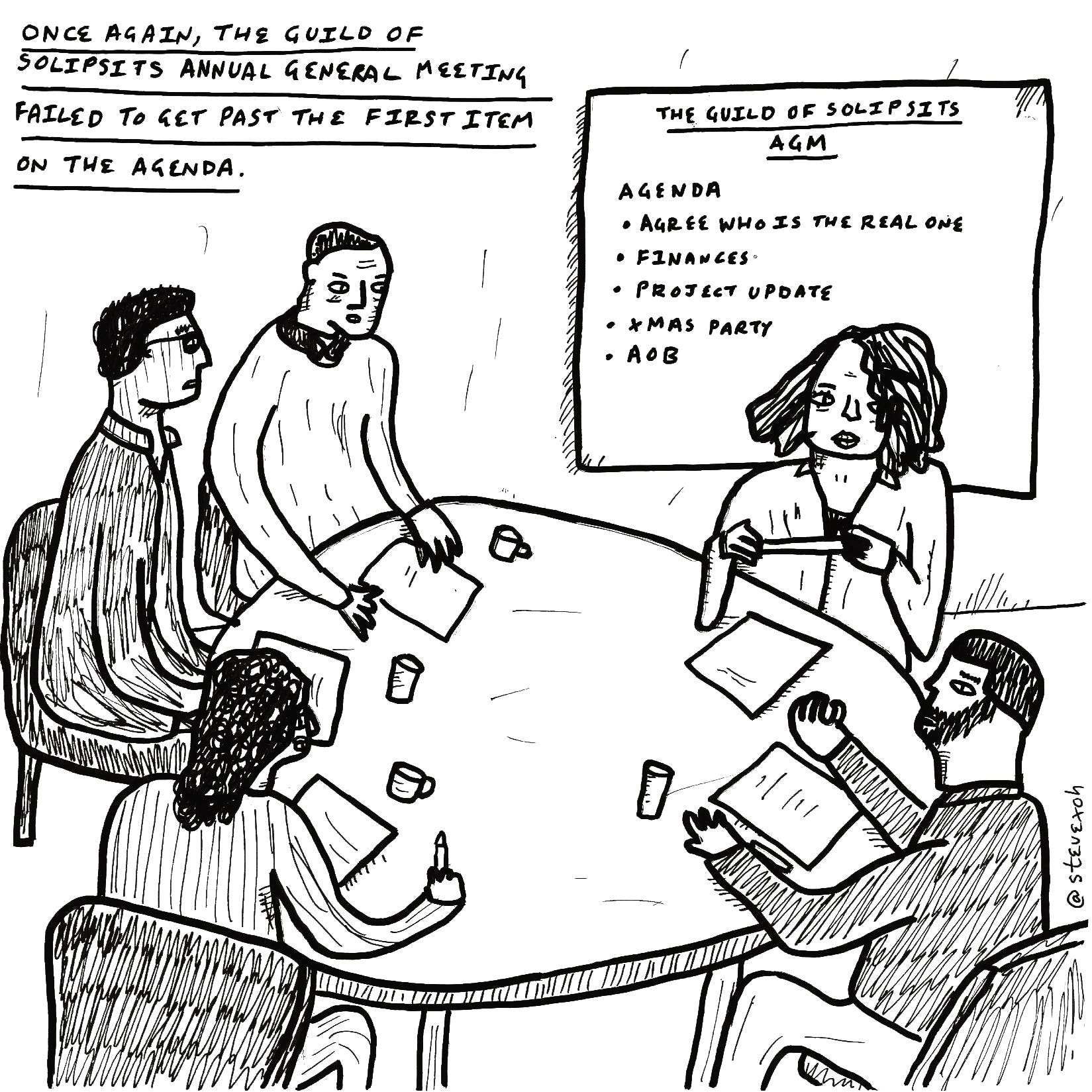
Solipsism is a philosophical position which suggests that the only thing one can be certain of is one’s own mind. At its most extreme, solipsists believe that their own mind is the only thing that exists and that everything else is simply a construction of their imagination. But whilst I know that I can only ever experience my own subjective reality, I’d never consider myself a solipsist as it seems to me that there is some sort of world “out there” even if it is distorted by my unique perception of it. But in that moment of paying attention, being astonished but then not having anyone to tell about it, I felt a very deep and existential aloneness.
This makes me wonder what it would be like to live in total isolation where my daily experiences were never witnessed by another human. I’ve wracked my brain to try and think of a time that I have come close to experiencing this and realise that I haven’t. Even when I lived alone on Ocracoke Island in the depths of winter I was witnessed by the handful of locals who had remained on the island and I had Instagram and WhatsApp to keep me connected to others. I imagine that if I had to live indefinitely with no human contact, I would go through a painful process of readjusting and learning to re-experience this existential aloneness as simply being a different configuration of the same flow of experience I have been having since I was born. I imagine it would re-calibrate my experience of myself and the natural surroundings I found myself in. This helps me realise even more starkly that, even though I value my alone time, I do need some form of human connection to provide some sort of external reassurance that I exist. But I digress somewhat from my lack of phone signal on the Cornish coast!
Social media is heavily criticised for being a place where people curate an artificial self-image for other people to witness and react to (be that with praise, envy or a sense of self-deficiency). And whilst I agree with this criticism and recognise its negative effects on society, I also wonder if the habit of sharing our experience actually serves a deeper purpose in facilitating us becoming both subject and object in a way that reassures us, very briefly, that we do exist. Maybe that is a much deeper factor in our addiction to our phones - they become the mother whose face reflects back who we are and our importance in the world. I like this theory, although I also find it very troubling that these little existential comfort blankets and the apps contained within them are ultimately the profit making tools of wealthy billionaires.
I share, therefore I am. Communico, ergo sum.
Badly named boats
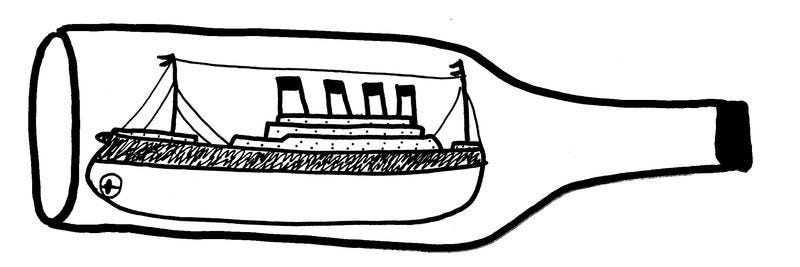
I’ve learnt a lot from spending so much time on the River Thames over the last year - the history of the river, how it changes over the 230 km I have kayaked along it and all about the wildlife that calls it home. But one of the things I have been surprised to discover is how many boats I have come across with terrible names.
What surprises me even more is that the bigger and more expensive-looking the boat, the worse the name seems to be. I imagine the owners of these boats as the type of people whose day-to-day life doesn’t revolve around making puns, yet they display them proudly on the side of one of their most expensive possessions and then sail it around for all to see. I think of these boat names as the maritime equivalent of a bad-taste Christmas jumper, albeit one that is visible for the entire year and costs significantly more.
Boat naming is, of course, an ancient tradition. For as long as human beings have been taking to the sea, boats have been given names that invoke gods, mythological creatures, kings and queens or locations that convey power and status. And there is a lot of superstition around boats, with rituals around naming and launching them and the idea that renaming a vessel is famously very bad luck. And whilst there have been some curiously named naval and merchant vessels over the years (HMS Cockchafer, HMS Spanker, HMS Tickler and three ships named SS Lesbian, for example), it seems that the bad puns are reserved for private boat ownership.
One of the logical reasons for this phenomenon is that powered boats on the Thames have to be legally registered and named. On top of this, the name has to be unique, which means that the more boats that are registered, the number of available names diminishes significantly. This at least explains why this phenomenon remains a boat-related one and why we don’t have cars called “I wheely love you” or houses named “A tree-mendous gnome”.
Some of my “favourite” names from recent trips have been Yacht to Be Kidding, Breaking wind and You plonker Rodney (One of a few I’ve seen named after the 1980s British comedy show Only Fools and Horses). Now I realise that my description of these names as “bad” is utterly subjective and that maybe I am just a pretentious artist who doesn’t appreciate puns. But I do wonder how secretly embarrassed the owners become once the excitement of buying and naming a boat fades.
I therefore propose a test that all boat owners should have to pass before naming their vessel. It is inspired by an idea that the comedian Stephen Merchant came up with to test whether a band name is good or not. Merchant proposed that every band should have to imagine their name being announced in front of a huge festival crowd and would only be regarded as acceptable if they didn’t feel any level of cringe. (e.g. “Please welcome to the stage FRUMPY BUTTER”). I propose a similar test where boat owners are required to put out a VHF Mayday call to the coastguard and are only allowed to name their boat if they experience a total absence of embarrassment at telling them that NIGEL’S LITTLE NAUTI BOY is in grave danger.
2. The Fischer protocol (and other ethical ideas)
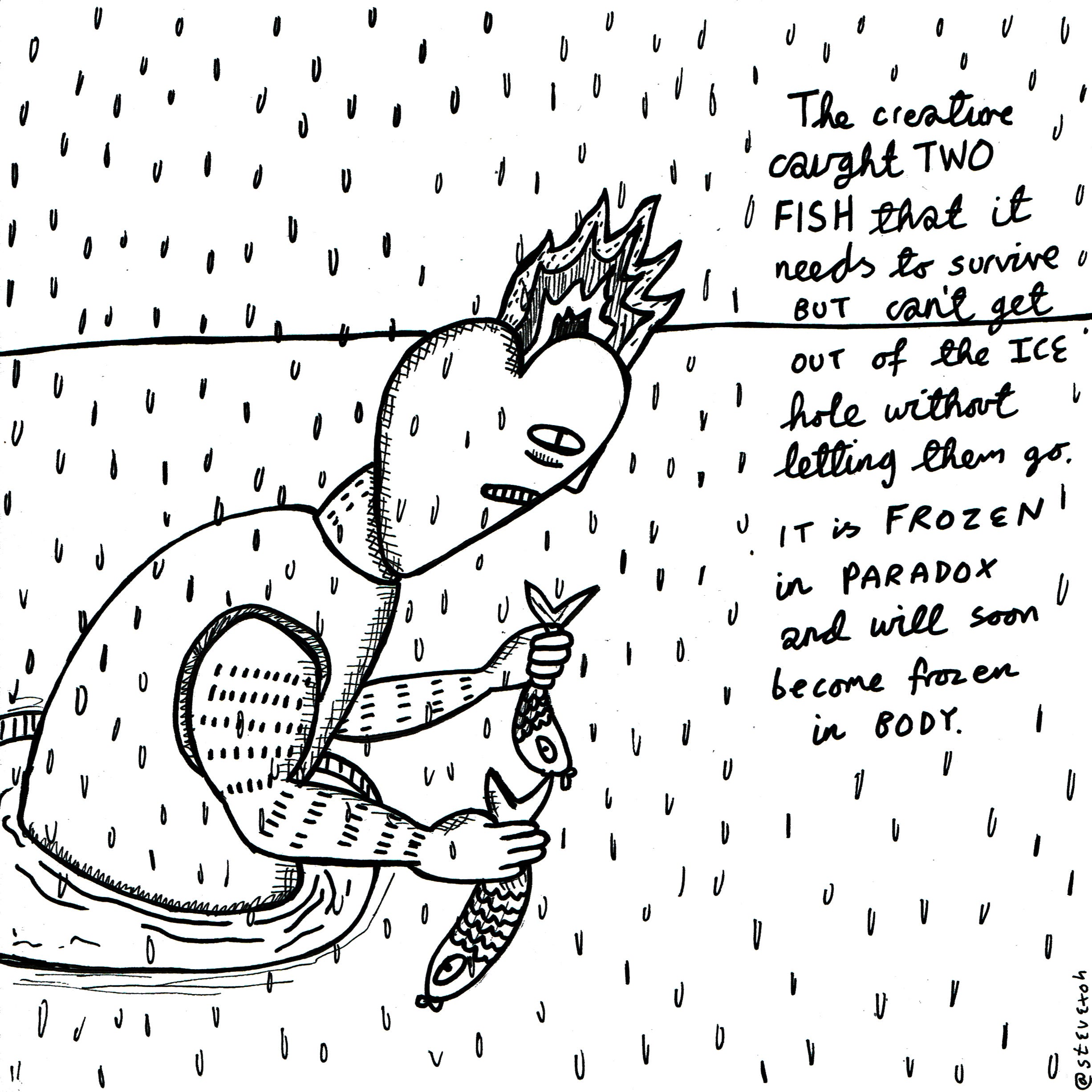
Roger Fisher, a Harvard law professor and negotiation theorist, proposed an intentionally horrifying thought experiment during the Cold War in order to invoke a moment of humanity that might change the mind of the person pushing the nuclear button. The Fisher Protocol, as it became known, was this: put the nuclear launch codes inside a capsule implanted next to the heart of a volunteer who would accompany the US President wherever they went. Should the President decide to launch a nuclear strike, they would only be able to do so by personally killing the volunteer with a large butcher’s knife in order to gain access to the launch codes. Fisher’s idea arose from his concern that the remote nature of nuclear command systems made mass killing too abstract and frictionless. The point of his thought experiment therefore was to collapse the enormous psychological distance between pressing a button and killing actual human beings.
The Fisher Protocol intrigued me both by its macabre nature and by how brilliantly it collided theory and distance with practice and proximity. Ever since then I have been coming up with other similar thought experiments that could be used to interrupt patterns in our everyday life, from the mundane through to the annoying through to the existentially important.
The Party Protocol: I am very sensitive to sound and somewhat live in fear of neighbour noise, having had some horrible experiences in the past. The thing about this is that it is less the noise that bothers me and more the perceived lack of consideration of the impact it will have on myself and other neighbours. So The Party Protocol works like this. Anyone who wants to have a party later than 10pm at night must agree to having the same level and type of noise played through loudspeakers from the point they try to go to sleep. The nature of the sounds matches the nature of the party (i.e. talking, shouting, singing, music etc.) and the loudspeakers will play for the exact amount of time that the party went on for at exactly the same through-the-wall-volume that other neighbours experienced. The intention of The Party Protocol is not to prevent neighbour noise, but to invoke a moment of consideration and choice over the nature, the volume and the duration of it.
The Habitat Destruction Protocol: The intention of this protocol is to create a moment of empathy and connection with nature before granting any planning application. Before the go-ahead is given for any development, those in a position of authority must stand in front of a large-scale model of the site that includes a miniature of every individual tree and every individual species that lives there. In order to authorise the destruction of this habitat, the officials have to personally destroy every individual tree, squirrel, deer, badger (etc.) represented on the model with a hammer. As each piece is destroyed, deafeningly loud speakers emit the pained cry of the creature. Planning is only approved when every element has been destroyed.
The Petrol Emissions Protocol: The intention of this protocol is to reduce the environmental impact of unnecessary car journeys by introducing a step between getting in the car and driving off. All emission-generating cars are fitted with a small furnace on the dashboard. In order to start the engine of the car, a tiny yellow chick must be placed in the furnace and the clear glass door closed. When the ignition key is turned, the car starts and the furnace is activated, incinerating the chick. Each time a chick is incinerated, the digital displays on the car’s interior and exterior are updated to show, “The owner of this car has sacrificed 1,120 tiny chicks to the gods of petrol.” Vehicles with higher emissions will require more chicks in order to start the engine.
Are these things practical, feasible or fair? Probably not. But the realistic implementation of them isn’t the point. They are thought experiments to sit with, to ponder, to explore. And for me, they simultaneously do two important things: they do not prohibit the behaviour, but they do collapse the distance between choice and consequence through introducing contact with “the faceless other.”
The philosopher Emmanuel Levinas suggested that human ethics begin through the encounter with another being and that encountering another’s face isn’t simply a moment of seeing their physical features but a moment of being confronted by another vulnerable creature who exists independently of ourselves. The Fisher Protocol (and my additional whimsical/weird alternatives) seem to do the job of, at least theoretically, bringing such an encounter into a moment of choice.
When Hannah Arendt attended the trial of Nazi official Adolf Eichmann, she was struck not by his appearance as some uniquely evil monster, but by what she described as his “thoughtlessness”. By this she didn’t mean stupidity, but an apparent and baffling inability to stop and think about what he was doing from the standpoint of somebody else. This observation contributed to her famous idea of the “banality of evil”: that participation in enormous evil does not necessarily require some uniquely monstrous psychology but simply a lack of thought that leads to conformity, bureaucracy and a failure to stop and critically examine what one is doing. Arendt asks, “Could the activity of thinking as such, the habit of examining whatever happens to come to pass or to attract attention, regardless of results and specific content, could this activity be among the conditions that make men abstain from evil-doing or even actually ‘condition’ them against it?”
I’m left intrigued by the real-world potential of these thought experiments in modern times. What if such a practice of coming up with them and sitting with them became part of everyday practice in business, government and society. Maybe this would open up a thin slice of grey between the polarising binaries we seem to be stuck in that involve either simply blanket banning something or doing it mindlessly and without thought. Gestalt psychology has been a big influence on my work and I often describe it in a nutshell as “here-and-now experiments to deepen awareness in order to recover choice”. We may still choose to do the same thing that we have always done, but at least now it is a conscious choice. The Fisher protocol and other ethical interruptions feel like a brilliantly weird and creative way to at least start doing this with some of the challenges we face in our day to day lives.
3. Open Studio
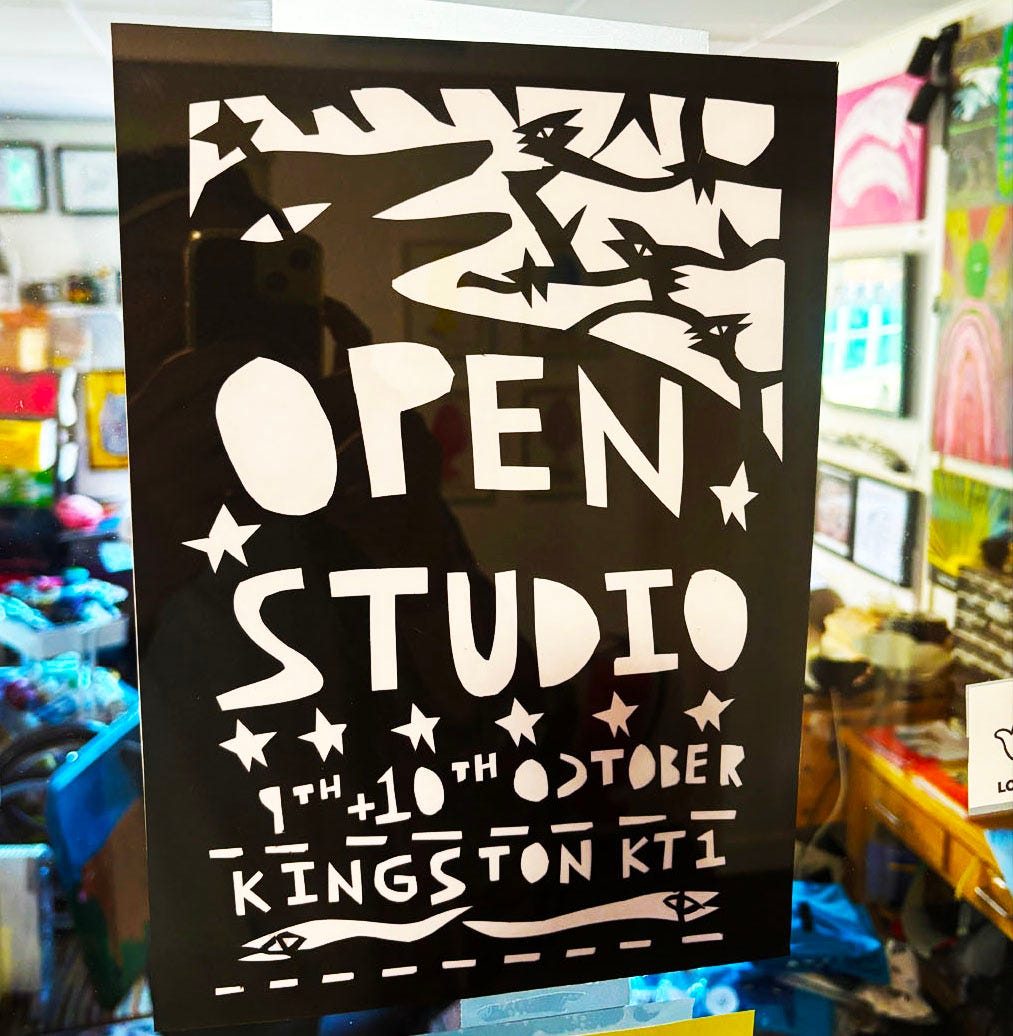
Studio Two Open Studio (Koppel Kingston Open Studios)
9th & 10th October 2026
Koppel Kingston, Kingston-upon-Thames
FREE ENTRY
I’m excited to be throwing the doors open to Studio Two as part of the Koppel Kingston autumn Open Studios.
This is a chance to come and hang out in my world, look at some art, chat, buy some stuff and visit the other studios in the building. (We have a total of 38, many of which will be open.). You can also hang out on the wonderful Kingston riverside, search for my Thames tiny tile trail and maybe spot the mysterious crested arse-foot bird.
There’s no need to book, but if you’d like more info you can find some on the link below. Or just drop me an e-mail. I hope to see you there.
..:: MORE INFO ABOUT OPEN STUDIO ::.
4. Workshops, exhibitions and events
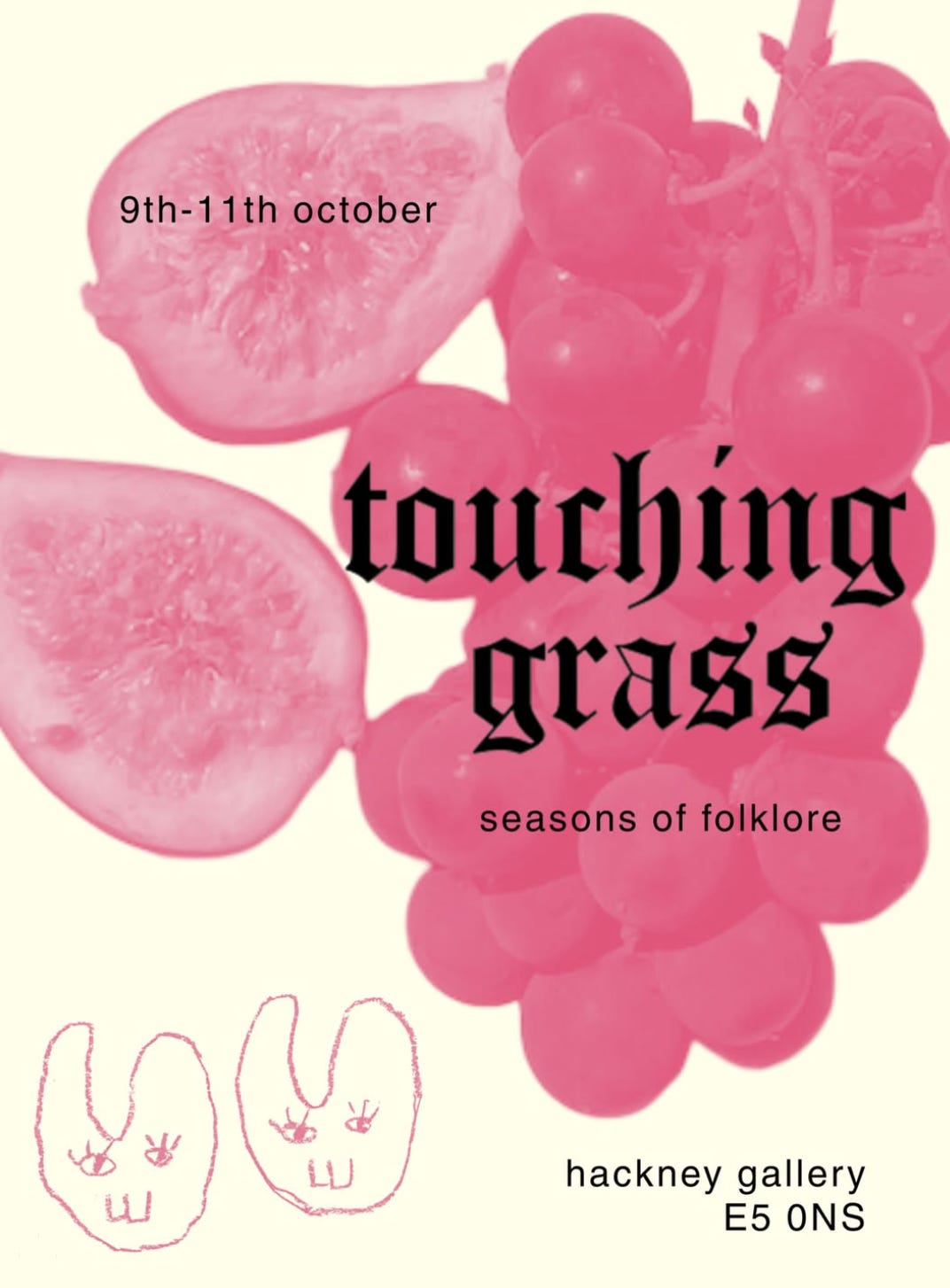
Touching Grass - An exhibition of folklore art
9th - 11th October 2026
Hackney Gallery, London E5 0NS
FREE ENTRY
I’m excited to have my “Days of the bridled cow” painting in an exhibition of folklore at the Hackney Gallery this month. The exhibition, curated by Hare, is a collection of art inspired by folklore and its ties to people and animals in the natural world.
It is only on for one weekend so make sure you get it in the diary if you’d like to see it.
..:: MORE INFO ::.
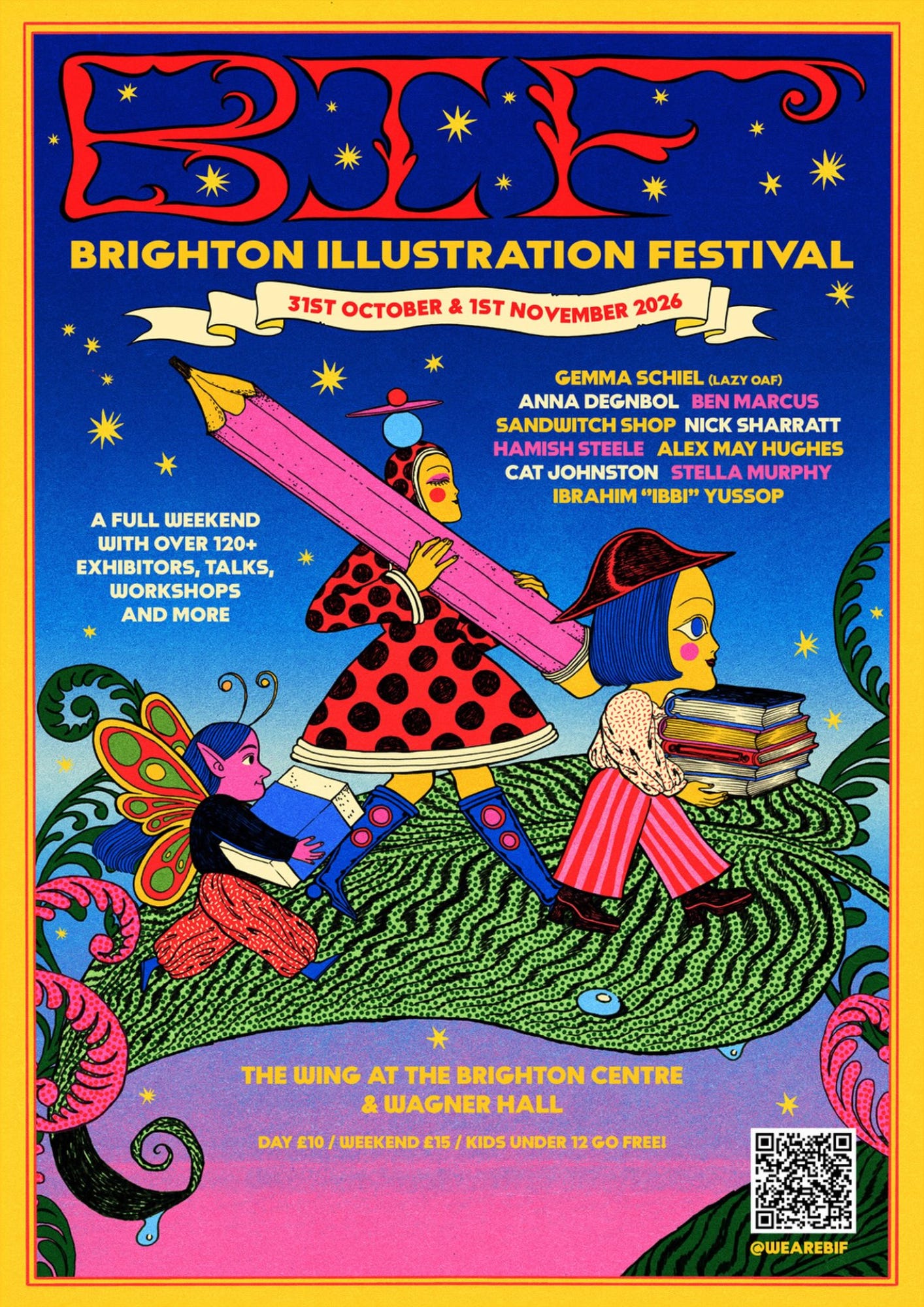
Brighton Illustration Festival
31st October + 1st November 2026
Brighton
Tickets from £10
I’m very selective about what markets/art fairs I do nowadays but have always wanted to be part of the prestigious Brighton Illustration Festival so am delighted that this year I will be.
I will be amongst a plethora of illustrators taking residence right by the sea in the Brighton Center and will be selling a wide range of prints, cards, t-shirts, stickers, books and more.
And at 12:15 on the Sunday I will be giving my Bingo Machine talk for any festival goers who would like to join me in telling a random collection of strange art stories.
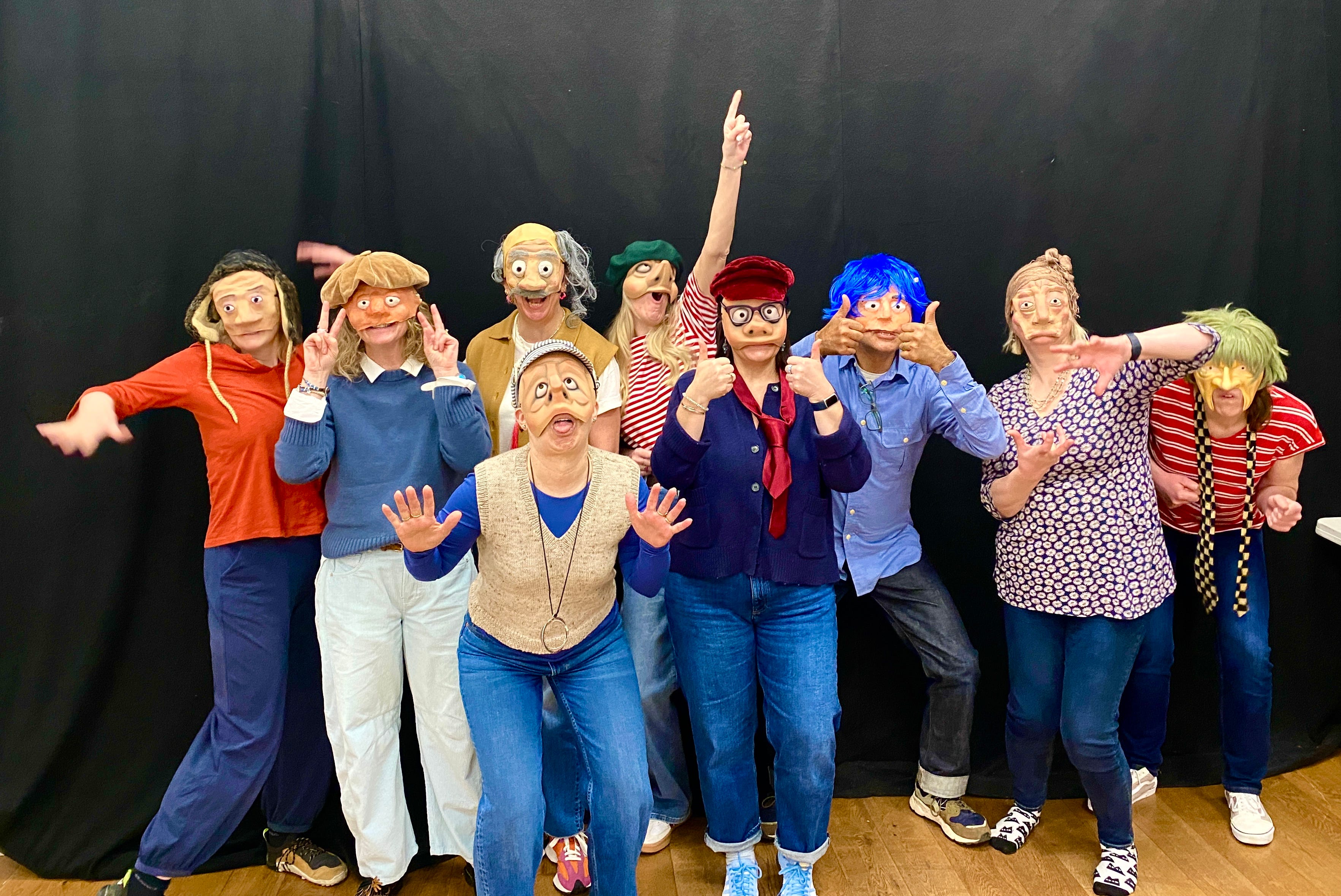
Mask Workshop
23rd October 2026
Bloomsbury, London
£145 + VAT. Limited to 10 attendees.
If you like what you read about masks issue #6 then is the workshop for you. It is my absolute favourite workshop to run. A day of using masks to explore parts of our personality that we have lost touch with or didn’t know existed. We will spend the morning getting to know different masks and the afternoon putting them in different playful and bizarre scenarios and situations.
Previous participants say:
“Simply the best workshop ever.”
“Possibly the most liberating experience you might ever have.”
“I’ll never forget the bits of me I met for the first time at the mask workshop.”
“Very weird. In a very, very good way.”
“A truly magical experience”
“It is like going home with a bunch of new friends inside yourself!”
To keep it playful and intimate the workshop is limited to just 10 places so if you’d like to come along the grab a place ASAP as they sell out quickly.
..:: MORE INFO AND TICKETS ::.
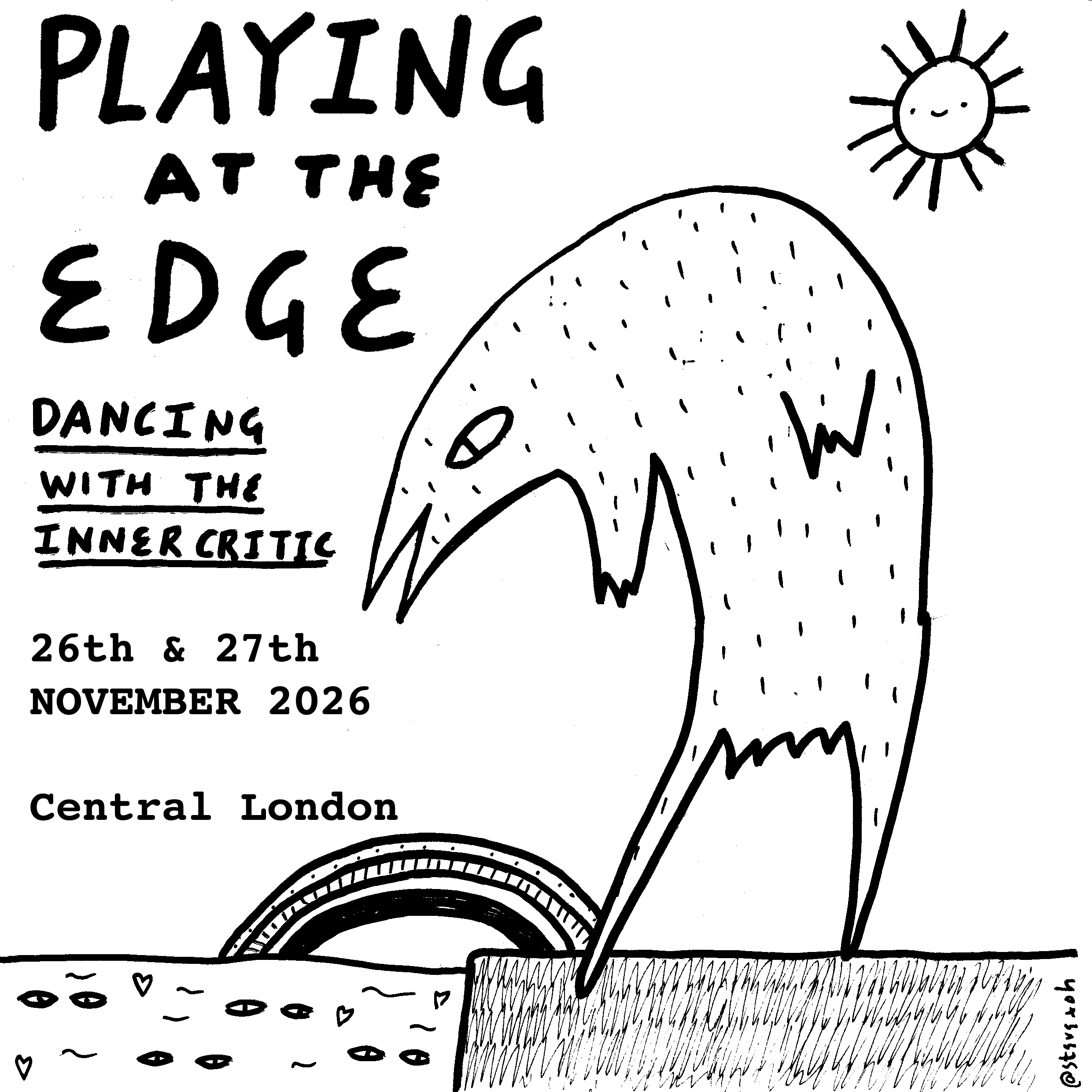
Playing at the Edge: Dancing with the inner critic
26th & 27th November 2026
Bloomsbury, London
£495 + VAT. Limited to 12 attendees. (ONLY TWO PLACES LEFT)
This two day workshop, facilitated by myself and gestalt psychotherapist Simon Cavicchia, uses a variety of creative experiments to help us get to know and better understand our inhibiting idealised self images, our inner critic and the effect this has on realising our full creative potential.
Participants will be invited to participate in a variety of Gestalt Psychology techniques, creative practices, masks, improvisational experiments, mindfulness practices and a variety of other methods to help them become more aware of their attachments to fixed self images and other ways in which they inhibit their spontaneity.
If you’d like to know a little bit more about this work then you can watch my 2017 talk about dancing with my inner critic or read about “poster’s on the super ego’s bedroom wall” in Issue #7 of this Substack.
..:: MORE INFO AND TICKETS ::.
5. Analogious joy - analogue versions of this Substack
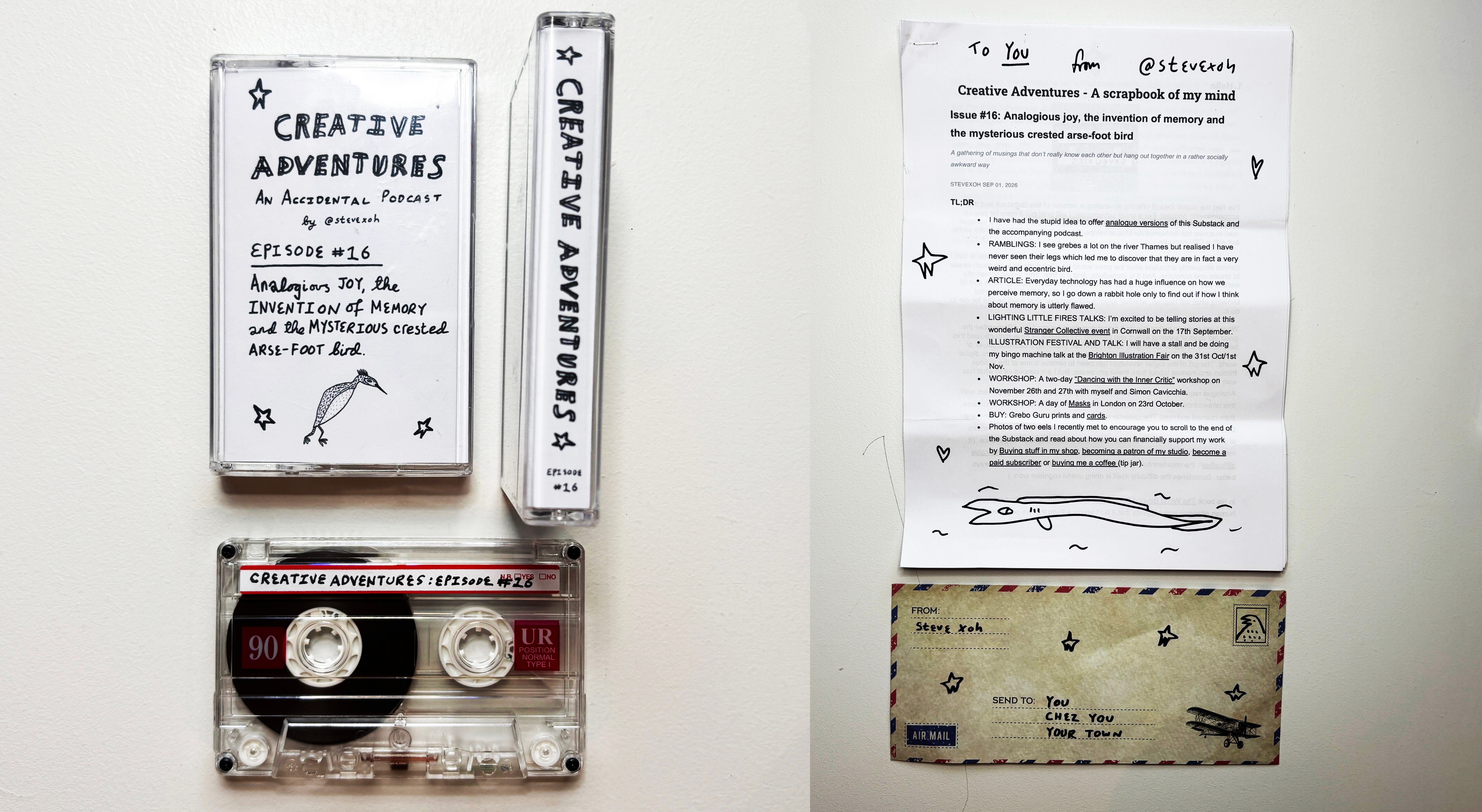
I am obsessed with analogue at the moment and the “necessary friction” that comes with it. (Full story about this in issue #16). So last month I launched analogue versions of this Substack and the accompanying podcast.
Surprisingly people were interested and either bought a single back issue/episode or subscribed to receive the next six in analogue format.
If you’re interested in joining the experiment then this is what you get:
SUBSTACK (£10 per issue + free postage)
* Edition printed on 100gsm white paper
* Hand-drawn doodles on each page
* Sent in a lovely, hand addressed, retro Air Mail envelope
* Approximately 8 - 10 double-sided pages per issue.
* Sent as Royal Mail 1st class letter
PODCAST (£15 per episode + free postage)
* Episode recorded onto a single C90 cassette in plastic case
* Custom printed cassette inlay featuring episode artwork
* Hand written cassette label
* Recorded on one side-only (unless episode longer than 45 mins)
* Cassettes: Maxwell UR C90
* Sent as Royal Mail 1st class Large Letter
How it works:
* You can buy a single issue/episode or multiple issues/episodes in one go.
* If you buy a six month subscription then you will get one issue/episode free
* If you select NEXT RELEASE then I will send out the next episode to be released after you placed your order.
..:: BUY ANALOGIOUS JOY HERE ::..
6. Support my work
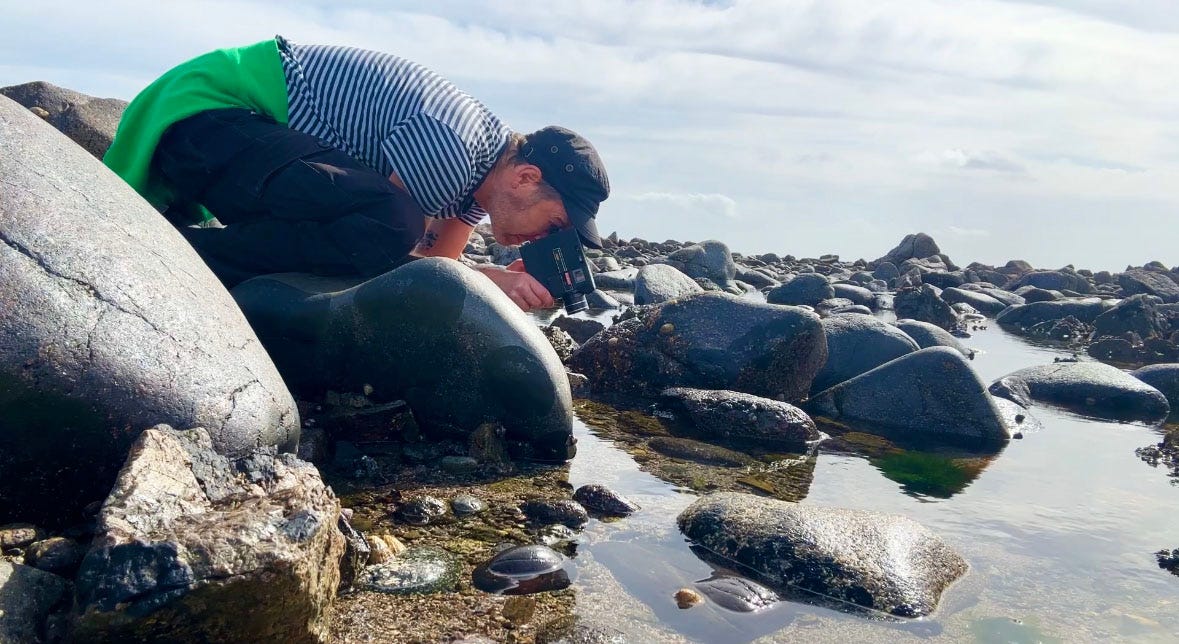
I went to see the beautiful Super Nature film at the IMAX in London recently. The film is the output of a project by director Ed Sayers who describes it as “a love letter to nature created on Super 8 film by people connecting across the world.” I’ve been a big fan of nature documentaries all my life but there was something about the grainy, analogue nature of this film that made it so much more intimate and immersive than the incredibly polished and sharp Attenborough programmes. It almost felt like I was seeing the secret home movies that the creatures themselves had filmed.
The timing of going to see the film was serendipitous with my current obsession about analogue making (see the previous issue of this Substack) and as soon as I got home I scoured the internet to find a Super 8 camera to buy. Even more serendipitously I had the trip to Cornwall planned the following week so decided I would bring the camera and make my first ever short analogue film about crabs which I hope to be able to share with you sometime over the next couple of months. I would not have been able to purchase the camera, film and associated development costs without the financial support of you all.
I want this Substack to be free and accessible for everyone irrelevant of financial means (the podcast version too) and this is an important principle in much of my work. When I do charge for things, like art or workshops or events, I strive to do so in a way that doesn’t exclude those who do not have the financial means to participate.
So, when people do support my work financially it means so much and helps me continue to work in this way and do things like spend a month making a mask out of a water bottle just because it fits on my head.
If you can afford to do so you can support my work in a number of ways, be that buying me a coffee from £1, buying some art from my shop, becoming a patron of my studio or becoming a paid subscriber to this Substack. (And if you can’t afford it then I absolutely love you getting this for free.)
Buy some art from my shop. I have a big selection of prints, original art, books, badges, t-shirts, posters and more.
.:: VISIT MY SHOP HERE ::.Become a patron of my studio. For a one-off donation of your choice you become an official patron with a badge, a certificate, a behind the scenes blog and your name added to the scroll of honour in the window of the studio.
.:: BECOME A PATRON HERE ::.Buy me a coffee from £1. Like a tip jar.
.:: BUY ME A COFFEE HERE::.Become a paid subscriber of this Substack. I didn’t even know this was an option until a few people spontaneously did it! You don’t get any extra content or anything but you do get my eternal gratitude!